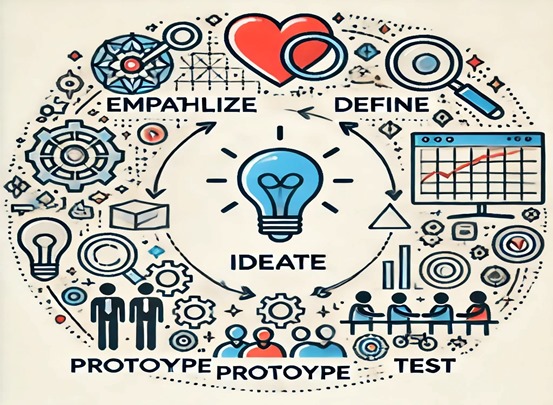
Stage 1. Empathize: Understand User Needs
What is to empathize
Empathize involves researching about the people who are experiencing a problem, what is their needs and how they are affected by the problem with the aim of creating user-friendly solutions.
In food system those affected may be: Farmers, consumers, distributors, and policymakers are key players. Engage with them to understand their needs, frustrations, and aspirations.
Ways of gathering information about a problem
Observation: Visit farms, markets, or food processing facilities to observe first-hand the problems affecting food production, waste, or distribution.
User Interviews: Talk to various actors in the food value chain to gain insights.
Surveys: sending out questions to a group to gather their opinions about a problem/issue, behaviours and needs
Empathy maps: helps to summarise the feelings, pain points, needs, gains of the people experiencing a problem. A sample empathy map can be found in the resources/files
User journey maps: This describes the step-by-step process taken to complete a task or achieve a goal. E.g. steps taken in purchasing a product online.
Examples:
1. Understand why small-scale farmers struggle with low yields or limited access to markets.
2. Identify barriers consumers face in accessing affordable, nutritious food.
Stage 2. Define: Frame the Problem
Steps to defining a problem
- 1. Analyze all the data you gathered and identify key challenges, needs, desired gains, and opportunities for improvement. This can be done by identifying the common themes or patterns from the data you have gathered. Empathy maps are a great tool in helping to synthesis the information
- 2. Choose a specific issue that can be addressed within the food system, such as post-harvest loss or market inefficiencies. Focus on a specific challenge, you cannot solve all problems at once.
- 3. Define the problem: make a simple and clear outline of the problem you want to solve. A good problem definition/statement identifies (i) who has the problem (ii) what is their most pressing/key need (iii) why do they have the need
- Example:
Problem Statement: " As Kamau, I want to get a ready market for my tomatoes so that I always have a market to sell my tomatoes and have a reliable source of income. How might we help Kamau find a ready market to sell his tomatoes every time?
.png)